
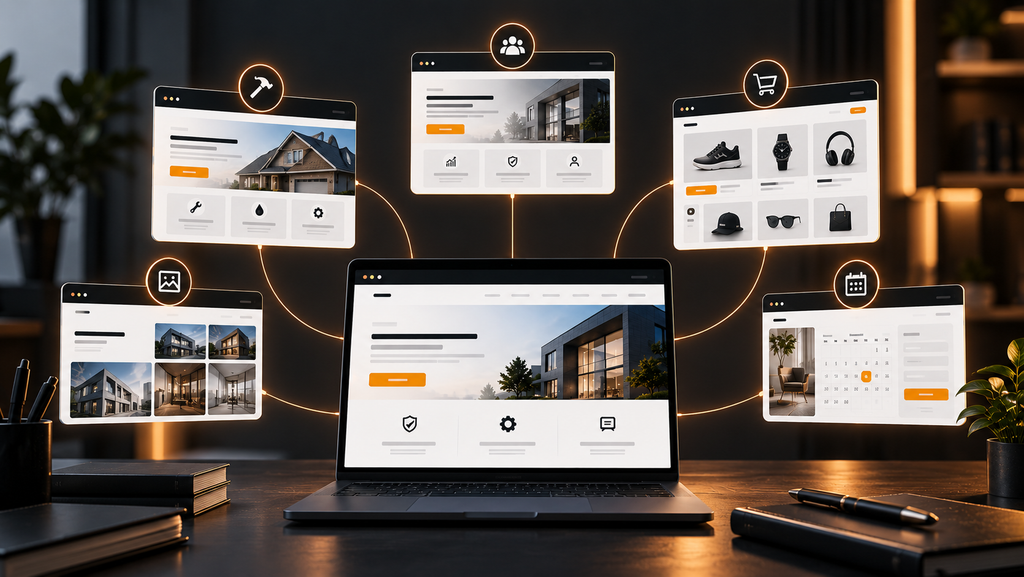
How to Choose the Right Website for Your Business
Not every business needs the same type of website.
A local service business, an online store, a consultant, and a growing company can all have completely different website requirements. Choosing the right structure from the beginning can save time, money, and unnecessary complications later.
The right question isn’t “What is the most advanced website I can build?”
It is “What does my business actually need its website to do?”
1. Start With Your Main Goal
Before choosing a website type, decide what you want the website to achieve.
For example, your main goal might be to:
- Generate enquiries
- Sell products
- Showcase your work
- Build credibility
- Explain your services
- Let customers book appointments
A website designed to generate enquiries will be structured differently from an online store.
Start with the business goal, then choose the website around it.
2. Local Service Businesses
If you provide a service in a specific area, you may not need a complicated website.
A local plumber, roofing company, dentist, photographer, or cleaning company may mainly need:
- Clear service information
- Areas served
- About the business
- Genuine reviews or previous work
- Contact details
- Enquiry or booking option
The main purpose is usually to help potential customers understand the service and make contact.
Adding unnecessary features can make the website harder to manage without providing much extra value.
3. Professional or Consulting Businesses
Consultants, agencies, freelancers, and other professionals often need a website that communicates expertise and builds trust.
A suitable website might include:
- Services
- About
- Previous work or case studies
- Client feedback where genuine
- Frequently asked questions
- Contact or booking options
For these businesses, the website often needs to answer an important question:
“Why should I choose this business?”
Clear information and genuine proof can be more valuable than a large number of pages.
4. eCommerce Businesses
If you sell products online, you need more than a standard business website.
An eCommerce website needs to make the shopping process straightforward.
Important areas can include:
- Product categories
- Product pages
- Search and filters
- Shopping cart
- Checkout
- Payment options
- Order information
The number of products also matters.
A small store with 20 products has very different requirements from a business managing thousands of products.
Choose the setup based on the size and complexity of your store rather than adding features simply because they are available.
5. Portfolio-Based Businesses
Some businesses need to show their work before people decide to contact them.
This can include photographers, designers, architects, builders, creative studios, and other visual businesses.
For these websites, the portfolio becomes an important part of the experience.
Good project images, useful descriptions, and a clear structure can help potential customers understand the quality and type of work you provide.
Don’t fill the portfolio with work that doesn’t represent what you want to be hired for.
Show the type of work you want more of.
6. Don’t Build More Than You Need
A common mistake is starting with too many features.
You may think you need:
- Membership systems
- Complex animations
- Multiple integrations
- Advanced booking systems
- Dozens of pages
- Custom dashboards
But if your business doesn’t actually need them, they can add cost and maintenance without solving a real problem.
Start with what your customers need today.
You can always expand the website as the business grows.
A Simple Way to Decide
Ask yourself these four questions:
What does my business sell?
What do I want visitors to do?
What information do they need before taking that action?
Will the website need to handle anything more complicated, such as products, bookings, or accounts?
Your answers will usually give you a much clearer idea of what type of website you actually need.
Final Thought
The right website isn’t necessarily the biggest, most expensive, or most technically advanced one.
It is the one that fits your business, customers, goals, and current needs.
Start with the purpose of the website, build around that purpose, and add complexity only when there is a real reason for it.