Author name: yashjz628@gmail.com

Online Growth

How to Make Your Business Stand Out Online

How to Make Your Business Stand Out Online Being online is no longer enough. Most businesses have websites, social media profiles, and competitors offering similar products or services. The challenge is getting the right people to notice your business and remember it. Standing out doesn’t mean being louder than everyone else. It means making it easy for people to understand what makes your business different and why it is worth their attention. Here are some practical ways to do that. 1. Be Clear About What Makes You Different Start with a simple question: Why should someone choose your business instead of another option? Your answer could be your experience, a specific service, your location, your approach, your product range, or the type of customers you specialise in. You don’t need a complicated slogan. You need a clear reason for someone to remember you. For example, instead of saying: “We provide quality services.” explain what makes your service different or who it is specifically designed for. Specific information is easier to understand and remember. 2. Give Your Website a Distinct Identity Your website should feel like it belongs to your business. Consistent colours, typography, photography, layouts, and visual elements can help create that identity. This doesn’t mean everything needs to be unusual. In fact, a simple visual system used consistently can often be more recognisable than a website full of different styles. Think about what someone should remember after leaving your website. Your visual identity should help create that memory. 3. Show Real Work One of the easiest ways to make a business more credible is to show what it actually does. If you have completed projects, display them. If you sell products, use clear and useful product photography. If you provide a service, show relevant examples of the work. Real examples give visitors something concrete to evaluate. Avoid filling your website with generic stock images when you could show the actual business, products, team, or work. 4. Create Useful Content You don’t always need to promote your business directly. Helpful content can demonstrate that you understand the problems your customers are trying to solve. Depending on your business, this could include: The important part is usefulness. Don’t create content simply because you feel you need to publish something. Create something that answers a question your potential customer genuinely has. 5. Make the Customer Experience Better Sometimes a business can stand out simply by being easier to deal with. Make important information easy to find. Respond clearly to enquiries. Keep your website simple to navigate. Make booking, purchasing, or contacting you straightforward. These details may seem small, but they shape how people remember their experience with a business. Standing out isn’t always about having the most impressive design. Sometimes it’s about removing unnecessary frustration. 6. Be Consistent Everywhere Your website, social media profiles, business listings, and other online channels should give people a consistent impression. That doesn’t mean every platform needs exactly the same design. But your: should generally remain consistent. When information changes from one platform to another, it can create confusion and make the business appear less organised. Don’t Try to Appeal to Everyone One of the easiest ways to become forgettable is to make your business message too broad. Trying to speak to everyone often results in messaging that doesn’t feel particularly relevant to anyone. Be specific about who you want to serve. The more clearly you understand your ideal customer, the easier it becomes to choose your messaging, content, visuals, and offers. You don’t need everyone to notice your business. You need the right people to recognise that your business is relevant to them. A Simple Test Look at your website as someone who has never heard of your business. Ask: What makes this business different? Who is it for? Can I see evidence of what they do? Does the business feel consistent and professional? Would I remember it after visiting another five websites? If the answers aren’t clear, you have a useful starting point. Final Thought Standing out online doesn’t require constant redesigns, flashy effects, or trying to copy whatever is currently popular. It starts with clarity, consistency, useful information, genuine proof, and a clear understanding of the people you want to reach. Be clear about what makes your business worth remembering, then make that difference visible wherever people find you online.
Uncategorized

How to Choose the Right Website for Your Business

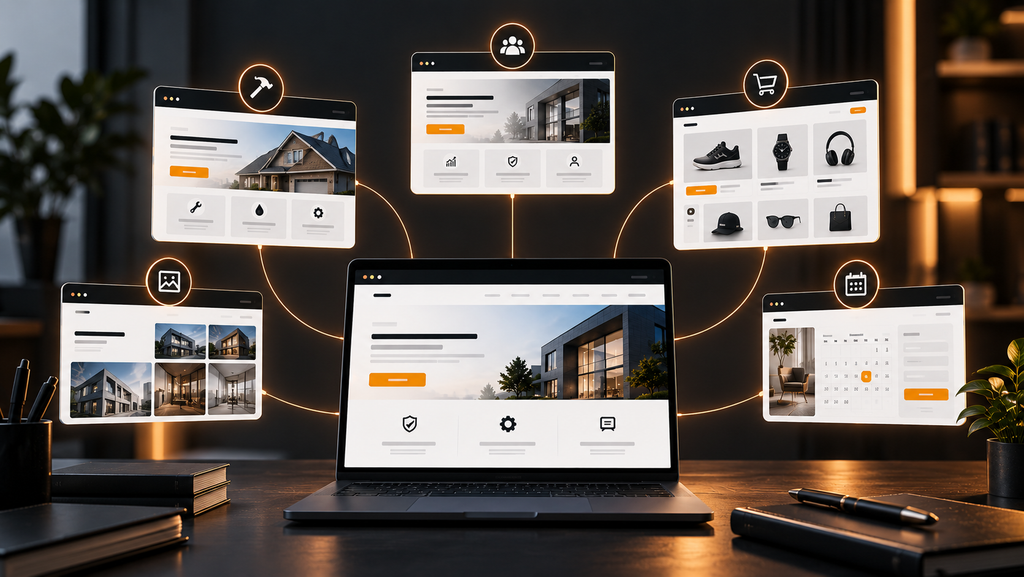
How to Choose the Right Website for Your Business Not every business needs the same type of website. A local service business, an online store, a consultant, and a growing company can all have completely different website requirements. Choosing the right structure from the beginning can save time, money, and unnecessary complications later. The right question isn’t “What is the most advanced website I can build?” It is “What does my business actually need its website to do?” 1. Start With Your Main Goal Before choosing a website type, decide what you want the website to achieve. For example, your main goal might be to: A website designed to generate enquiries will be structured differently from an online store. Start with the business goal, then choose the website around it. 2. Local Service Businesses If you provide a service in a specific area, you may not need a complicated website. A local plumber, roofing company, dentist, photographer, or cleaning company may mainly need: The main purpose is usually to help potential customers understand the service and make contact. Adding unnecessary features can make the website harder to manage without providing much extra value. 3. Professional or Consulting Businesses Consultants, agencies, freelancers, and other professionals often need a website that communicates expertise and builds trust. A suitable website might include: For these businesses, the website often needs to answer an important question: “Why should I choose this business?” Clear information and genuine proof can be more valuable than a large number of pages. 4. eCommerce Businesses If you sell products online, you need more than a standard business website. An eCommerce website needs to make the shopping process straightforward. Important areas can include: The number of products also matters. A small store with 20 products has very different requirements from a business managing thousands of products. Choose the setup based on the size and complexity of your store rather than adding features simply because they are available. 5. Portfolio-Based Businesses Some businesses need to show their work before people decide to contact them. This can include photographers, designers, architects, builders, creative studios, and other visual businesses. For these websites, the portfolio becomes an important part of the experience. Good project images, useful descriptions, and a clear structure can help potential customers understand the quality and type of work you provide. Don’t fill the portfolio with work that doesn’t represent what you want to be hired for. Show the type of work you want more of. 6. Don’t Build More Than You Need A common mistake is starting with too many features. You may think you need: But if your business doesn’t actually need them, they can add cost and maintenance without solving a real problem. Start with what your customers need today. You can always expand the website as the business grows. A Simple Way to Decide Ask yourself these four questions: What does my business sell? What do I want visitors to do? What information do they need before taking that action? Will the website need to handle anything more complicated, such as products, bookings, or accounts? Your answers will usually give you a much clearer idea of what type of website you actually need. Final Thought The right website isn’t necessarily the biggest, most expensive, or most technically advanced one. It is the one that fits your business, customers, goals, and current needs. Start with the purpose of the website, build around that purpose, and add complexity only when there is a real reason for it.

Website Design

How Good Website Design Can Turn Visitors Into Customers

How Good Website Design Can Turn Visitors Into Customers A good website should do more than look professional. When someone visits your website, they are trying to understand your business, decide whether they can trust you, and figure out what to do next. Good design makes that process easier. Here are some practical ways website design can help move visitors toward becoming customers. 1. Make a Strong First Impression People form an opinion about a website quickly. A clean layout, readable typography, quality images, and consistent colours can make a business feel more professional and easier to trust. You don’t need complicated animations or flashy effects. A simple, well-organised website can create a much stronger impression than a crowded one. The goal is to make visitors comfortable enough to keep exploring. 2. Make Important Information Easy to Find Visitors shouldn’t have to search through your website to find your services, contact details, or important information. Your navigation should be simple and your pages should have a logical structure. For example: Home → Services → About → Work → Contact The exact pages will depend on your business, but the principle is the same: help people find what they came for. 3. Create a Clear Visual Hierarchy Not everything on a page deserves the same amount of attention. Your main heading should stand out. Important information should be easy to notice. Your primary button should not disappear among dozens of other elements. You can create this hierarchy through: When everything looks equally important, visitors don’t know where to look. Good design guides their attention naturally. 4. Make Your Message Easy to Understand Design and content need to work together. A beautiful website won’t help much if visitors don’t understand what the business actually offers. Your main heading should clearly communicate what you do and who you help. For example: Professional Roofing Services for Homeowners is much more useful than: Building Better Futures The first one immediately gives the visitor context. Clarity should come before creativity. 5. Build Trust With Real Information People want to feel confident before spending money or contacting a business. Your website can support that through: Don’t use fake testimonials or invented results just to make the business look established. If you’re a new business, be honest about it. A professional website doesn’t need to pretend to have experience it doesn’t have. 6. Make the Next Step Obvious A visitor can like your website and still leave if they don’t know what to do next. Use clear calls to action such as: Request a Quote Book a Consultation View Our Services Start Shopping The CTA should match the purpose of the page. You don’t need buttons everywhere. Just make the important next step easy to recognise when the visitor is ready. 7. Design for Mobile A website that looks good on desktop can still provide a poor experience on mobile. Check whether: Don’t just check whether the website technically fits the screen. Use it on an actual phone and see how easy it feels. Keep the Design Focused One common mistake is adding too much to a website. More animations, more sections, more colours, and more pop-ups don’t automatically create a better experience. Before adding something, ask: Does this help the visitor understand the business, build trust, or take the next step? If it doesn’t, you may not need it. Final Thought Good website design isn’t about making every section look impressive. It’s about making the experience easier for the people visiting your business. Clear information, thoughtful structure, genuine proof, and an obvious next step can turn a website from a simple online presence into a useful business tool.

Online Growth

How to Get More Enquiries From Your Business Website

How to Get More Enquiries From Your Business Website Getting visitors to your website is only the first step. The real value comes when those visitors understand your business, trust what you offer, and know how to get in touch. A website can receive plenty of traffic and still generate very few enquiries if the experience is confusing or the next step is difficult to find. Here are some practical ways to improve that. 1. Make It Clear What You Offer When someone lands on your homepage, they should quickly understand what your business does. Your headline and supporting text should answer three basic questions: Avoid vague headlines that sound impressive but don’t explain anything. For example, “Helping Businesses Grow” could apply to almost any company. A more specific message such as “Commercial Cleaning Services for Offices and Retail Spaces” immediately gives visitors useful information. Clarity should come before creativity. 2. Explain Your Services Properly A potential customer should not have to contact you just to understand what a service includes. Give each important service enough information to help someone decide whether it is relevant to them. Explain things such as: You don’t need to write huge amounts of text. Focus on answering the questions a potential customer is most likely to have. The goal is to reduce uncertainty before they contact you. 3. Give Visitors a Clear Next Step Once someone understands your business, they should know what to do next. This is where a clear call to action helps. Depending on your business, it could be: Request a QuoteBook a ConsultationSend an EnquiryCall Now Choose wording that matches the actual action. For example, if you provide quotations, “Request a Quote” tells the visitor exactly what will happen next. You don’t need to fill every section with buttons. Place calls to action where visitors have enough information to naturally take the next step. 4. Make Contact Easy Imagine a visitor has decided they want to contact your business. If they now have to search through several pages to find your phone number or email address, you are adding unnecessary friction. Make the process simple. Depending on your business, you could provide: Keep enquiry forms reasonable as well. Asking for unnecessary information can discourage someone who simply wants to start a conversation. For a first enquiry, collect what you actually need to respond properly. 5. Use Real Proof to Build Confidence Before contacting a business, people often want some evidence that they can trust it. The type of proof depends on the business. You might show: The important thing is that the proof should be genuine. Don’t add fake testimonials, invented results, or made-up client logos just because they make a website look more established. If your business is new, be honest about it. Real work and genuine feedback will become stronger proof over time. 6. Remove Unnecessary Distractions A website can become less effective when it tries to do too much. Multiple pop-ups, excessive animations, unrelated banners, too many buttons, and unnecessary sections can distract visitors from the information that actually matters. Before adding another element to a page, ask: Does this help the visitor understand the business or take the next step? If it doesn’t, you may not need it. A clean website isn’t one with nothing on it. It’s one where every important element has a purpose. 7. Don’t Forget Mobile Visitors Your website may look perfect on a desktop and still be frustrating to use on a phone. Check the actual mobile experience. Look at: Try completing the entire enquiry process yourself using your phone. If you struggle to find the contact button or complete the form, a potential customer may struggle too. A Simple Test for Your Website Open your website as if you’ve never seen the business before. Then ask yourself: Do I understand what this business offers? Can I tell whether it is right for me? Do I have a reason to trust it? Do I know what to do next? If any of these answers are unclear, that is a useful place to start improving your website. Final Thought Getting more enquiries isn’t always about bringing more people to your website. Sometimes the bigger opportunity is to make better use of the visitors you already have. Clear messaging, useful information, genuine proof, and an easy next step can turn a confusing website into a much more useful business tool.

Website Strategy

5 Things Every Business Website Should Get Right

5 Things Every Business Website Should Get Right A business website does not need to be complicated to be effective. In fact, many websites become harder to use because they try to say too much, show too much, or do too much at once. When someone visits a business website for the first time, they are usually trying to figure out something simple: What does this business do, can it help me, and what should I do next? If your website can answer those questions clearly, you already have a strong foundation. Here are five things every business website should get right. 1. Make It Clear What Your Business Does The first few seconds matter. A visitor should not have to read your entire homepage to understand what you offer. Your headline, supporting text, and first section should make your business clear. For example, instead of: “Creating better possibilities for tomorrow.” A local accounting firm could say: “Accounting and Tax Services for Small Businesses.” The second version may not sound as clever, but the visitor immediately understands what the business does. Your website is not the place to make people guess. Ask yourself: Try to communicate those points as early as possible. 2. Make Navigation Simple A visitor should be able to move around your website without thinking about how the website works. Your main navigation does not need ten different options. For many businesses, something as simple as: Home · About · Services · Work · Contact may be enough. The exact pages depend on the business, but the principle stays the same: Put important information where people expect to find it. If someone wants to contact you, they should not have to search through several pages. If they want to understand your services, that information should be easy to reach. A clean navigation system is not about removing information. It is about organising it properly. 3. Give Visitors a Clear Next Step A website can explain your business perfectly and still fail to help the visitor if there is no obvious next step. Think about what you actually want someone to do after visiting your website. It might be: That action should be visible at the right points throughout the website. For example, a service business might use “Request a Quote”, while a consultant might use “Book a Consultation.” You do not need a button on every line of the page. You simply need to make the important action easy to recognise when the visitor is ready to take it. 4. Make the Website Easy to Use on a Phone A website that looks great on a large monitor can still provide a poor experience on a phone. This matters because people may discover your business while travelling, sitting at a café, taking a break at work, or simply browsing from their phone at home. Check your website on an actual mobile device. Look at things such as: Responsive design is not simply about making a desktop website smaller. The layout should adapt to the way people actually use the device. 5. Give People a Reason to Trust You A professional design can create a good first impression, but trust comes from more than appearance. Visitors want some evidence that your business is genuine and capable of helping them. Depending on your business, this could include: The key word is real. Do not add fake testimonials, invented results, or made-up client logos simply to make a website look established. If you are a new business, it is completely fine to have less proof. Use what you genuinely have and let the website communicate your business honestly. A Good Website Does Not Need to Be Complicated These five areas are connected. Clear messaging helps visitors understand your business. Simple navigation helps them find information. A clear call to action gives them a direction. Responsive design makes the experience work across devices. Real proof gives them a reason to feel comfortable moving forward. None of these require dozens of animations, complicated features, or an overloaded homepage. Sometimes the best improvement you can make to a website is simply removing what does not need to be there. Before You Launch, Ask Yourself Open your website as if you have never seen the business before. Then ask: Can I understand what this business does within a few seconds? Can I find the information I need without searching? Can I easily contact or buy from the business? Does the website work properly on my phone? Does the website give me genuine reasons to trust this business? If any answer is “no,” that is probably where your next improvement should start. A good business website is not the one with the most features. It is the one that makes the right things easy for the right people.

Website Strategy

Why Your Business Needs a Professional Website in 2026

Why Your Business Needs a Professional Website in 2026 A potential customer can discover your business in many ways today — through Google, social media, a recommendation, an advertisement, or even a conversation with someone they know. But after discovering you, there is often another step: They look you up. And when they do, your website can become one of the first places where they decide what they think about your business. A professional website is not simply a page with your logo, services, and phone number. When done properly, it gives people a clear understanding of what you offer, who you are, and what they should do next. Here is why that matters for businesses in 2026. 1. Your Website Gives Your Business a Home Online Social media is useful for getting attention, but your business does not fully control those platforms. Your website is different. It gives you one place where people can find your services, learn about your business, see your work, and contact you without jumping between different platforms. For example, a potential customer might discover your Instagram page today and find your website tomorrow. Instead of relying on them to scroll through old posts to understand your business, you can give them a dedicated place where everything important is organised. That makes the process easier for both sides. 2. People Want to Know What They Are Getting Before contacting a business, people usually have questions. What exactly do they offer? Is this business right for my needs? Where are they located? How can I contact them? Can I see their previous work? A good website answers these questions without making visitors work for the information. This is especially important for service businesses. If someone needs a website, for example, they want to understand what kind of websites you build, what you can help with, and how they can start a conversation. The clearer your website is, the less guessing the visitor has to do. 3. Your Website Becomes Part of Your First Impression Your website cannot create trust by itself. But it can certainly affect the impression people form about your business. Imagine finding a business through Google and opening its website. The pages are difficult to navigate. The information is outdated. The website does not work properly on your phone. You cannot even find a clear way to contact them. Now compare that with a website where the information is organised, the design is consistent, the pages work properly, and contacting the business is simple. The difference is not necessarily about having an expensive design. It is about showing that attention has been given to the customer experience. Professional does not mean complicated. Often, a simple and well-organised website creates a better experience than one filled with unnecessary effects and information. 4. A Website Can Make It Easier to Generate Enquiries Getting visitors to your website is only the beginning. Once they arrive, they need to know what to do. A website should make the next step obvious. Depending on the business, that might be: For example, if you run a local roofing business, a visitor should not have to search around to find out how to request an estimate. If you sell products online, customers should be able to move from finding a product to purchasing it without unnecessary confusion. The website should support the action that matters most to your business. 5. Your Business Is Available Even When You Are Not Your business may have opening hours. Your website does not. Someone could discover your business late at night, look through your services, check your contact details, and send an enquiry before you even start work the next morning. That does not mean every website visitor will become a customer. It simply means your business has a place where people can learn about you whenever they are ready to do so. For businesses that depend on enquiries, bookings, or online purchases, that availability can be useful. 6. Your Website and Social Media Can Work Together Having a website does not mean you need to stop using Instagram, Facebook, LinkedIn, or other platforms. They serve different purposes. Social media can help people discover your business. Your website can help them understand it. Someone might see your work on Instagram, become interested, and then visit your website to learn more before contacting you. That is why your website should not be treated as something separate from your online presence. It can become the place where all those different channels lead. What Should a Professional Business Website Include? There is no single structure that works for every business. A local service business may need a simple website with: An eCommerce business will need something different, including product pages, categories, shopping functionality, and checkout. The important thing is not having the most pages. It is having the right pages and information for your customers. Every section should have a reason for being there. A Professional Website Is More Than Good Design Good design matters, but design alone is not enough. A website can look impressive and still fail to help a business if visitors cannot understand what the business does or figure out how to contact it. A useful business website should answer three basic questions quickly: What do you offer? Why should I consider you? What should I do next? If your website can answer those questions clearly, you already have a much stronger foundation. Final Thought A professional website will not automatically bring customers, increase sales, or make a business successful. But it can give your business a clear, credible, and accessible place online where potential customers can understand what you offer and decide whether they want to take the next step. And in 2026, that is the real value of having a website. Not simply being online — but making it easier for the right people to understand your business.

Scroll to Top