
Website Strategy

Website Strategy

5 Things Every Business Website Should Get Right

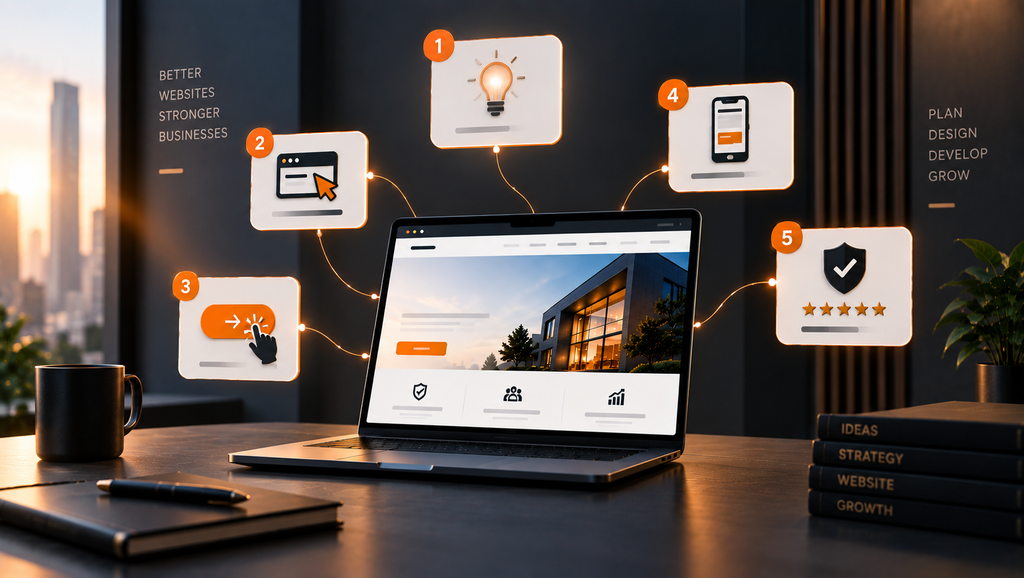
5 Things Every Business Website Should Get Right A business website does not need to be complicated to be effective. In fact, many websites become harder to use because they try to say too much, show too much, or do too much at once. When someone visits a business website for the first time, they are usually trying to figure out something simple: What does this business do, can it help me, and what should I do next? If your website can answer those questions clearly, you already have a strong foundation. Here are five things every business website should get right. 1. Make It Clear What Your Business Does The first few seconds matter. A visitor should not have to read your entire homepage to understand what you offer. Your headline, supporting text, and first section should make your business clear. For example, instead of: “Creating better possibilities for tomorrow.” A local accounting firm could say: “Accounting and Tax Services for Small Businesses.” The second version may not sound as clever, but the visitor immediately understands what the business does. Your website is not the place to make people guess. Ask yourself: Try to communicate those points as early as possible. 2. Make Navigation Simple A visitor should be able to move around your website without thinking about how the website works. Your main navigation does not need ten different options. For many businesses, something as simple as: Home · About · Services · Work · Contact may be enough. The exact pages depend on the business, but the principle stays the same: Put important information where people expect to find it. If someone wants to contact you, they should not have to search through several pages. If they want to understand your services, that information should be easy to reach. A clean navigation system is not about removing information. It is about organising it properly. 3. Give Visitors a Clear Next Step A website can explain your business perfectly and still fail to help the visitor if there is no obvious next step. Think about what you actually want someone to do after visiting your website. It might be: That action should be visible at the right points throughout the website. For example, a service business might use “Request a Quote”, while a consultant might use “Book a Consultation.” You do not need a button on every line of the page. You simply need to make the important action easy to recognise when the visitor is ready to take it. 4. Make the Website Easy to Use on a Phone A website that looks great on a large monitor can still provide a poor experience on a phone. This matters because people may discover your business while travelling, sitting at a café, taking a break at work, or simply browsing from their phone at home. Check your website on an actual mobile device. Look at things such as: Responsive design is not simply about making a desktop website smaller. The layout should adapt to the way people actually use the device. 5. Give People a Reason to Trust You A professional design can create a good first impression, but trust comes from more than appearance. Visitors want some evidence that your business is genuine and capable of helping them. Depending on your business, this could include: The key word is real. Do not add fake testimonials, invented results, or made-up client logos simply to make a website look established. If you are a new business, it is completely fine to have less proof. Use what you genuinely have and let the website communicate your business honestly. A Good Website Does Not Need to Be Complicated These five areas are connected. Clear messaging helps visitors understand your business. Simple navigation helps them find information. A clear call to action gives them a direction. Responsive design makes the experience work across devices. Real proof gives them a reason to feel comfortable moving forward. None of these require dozens of animations, complicated features, or an overloaded homepage. Sometimes the best improvement you can make to a website is simply removing what does not need to be there. Before You Launch, Ask Yourself Open your website as if you have never seen the business before. Then ask: Can I understand what this business does within a few seconds? Can I find the information I need without searching? Can I easily contact or buy from the business? Does the website work properly on my phone? Does the website give me genuine reasons to trust this business? If any answer is “no,” that is probably where your next improvement should start. A good business website is not the one with the most features. It is the one that makes the right things easy for the right people.

Website Strategy

Why Your Business Needs a Professional Website in 2026

Why Your Business Needs a Professional Website in 2026 A potential customer can discover your business in many ways today — through Google, social media, a recommendation, an advertisement, or even a conversation with someone they know. But after discovering you, there is often another step: They look you up. And when they do, your website can become one of the first places where they decide what they think about your business. A professional website is not simply a page with your logo, services, and phone number. When done properly, it gives people a clear understanding of what you offer, who you are, and what they should do next. Here is why that matters for businesses in 2026. 1. Your Website Gives Your Business a Home Online Social media is useful for getting attention, but your business does not fully control those platforms. Your website is different. It gives you one place where people can find your services, learn about your business, see your work, and contact you without jumping between different platforms. For example, a potential customer might discover your Instagram page today and find your website tomorrow. Instead of relying on them to scroll through old posts to understand your business, you can give them a dedicated place where everything important is organised. That makes the process easier for both sides. 2. People Want to Know What They Are Getting Before contacting a business, people usually have questions. What exactly do they offer? Is this business right for my needs? Where are they located? How can I contact them? Can I see their previous work? A good website answers these questions without making visitors work for the information. This is especially important for service businesses. If someone needs a website, for example, they want to understand what kind of websites you build, what you can help with, and how they can start a conversation. The clearer your website is, the less guessing the visitor has to do. 3. Your Website Becomes Part of Your First Impression Your website cannot create trust by itself. But it can certainly affect the impression people form about your business. Imagine finding a business through Google and opening its website. The pages are difficult to navigate. The information is outdated. The website does not work properly on your phone. You cannot even find a clear way to contact them. Now compare that with a website where the information is organised, the design is consistent, the pages work properly, and contacting the business is simple. The difference is not necessarily about having an expensive design. It is about showing that attention has been given to the customer experience. Professional does not mean complicated. Often, a simple and well-organised website creates a better experience than one filled with unnecessary effects and information. 4. A Website Can Make It Easier to Generate Enquiries Getting visitors to your website is only the beginning. Once they arrive, they need to know what to do. A website should make the next step obvious. Depending on the business, that might be: For example, if you run a local roofing business, a visitor should not have to search around to find out how to request an estimate. If you sell products online, customers should be able to move from finding a product to purchasing it without unnecessary confusion. The website should support the action that matters most to your business. 5. Your Business Is Available Even When You Are Not Your business may have opening hours. Your website does not. Someone could discover your business late at night, look through your services, check your contact details, and send an enquiry before you even start work the next morning. That does not mean every website visitor will become a customer. It simply means your business has a place where people can learn about you whenever they are ready to do so. For businesses that depend on enquiries, bookings, or online purchases, that availability can be useful. 6. Your Website and Social Media Can Work Together Having a website does not mean you need to stop using Instagram, Facebook, LinkedIn, or other platforms. They serve different purposes. Social media can help people discover your business. Your website can help them understand it. Someone might see your work on Instagram, become interested, and then visit your website to learn more before contacting you. That is why your website should not be treated as something separate from your online presence. It can become the place where all those different channels lead. What Should a Professional Business Website Include? There is no single structure that works for every business. A local service business may need a simple website with: An eCommerce business will need something different, including product pages, categories, shopping functionality, and checkout. The important thing is not having the most pages. It is having the right pages and information for your customers. Every section should have a reason for being there. A Professional Website Is More Than Good Design Good design matters, but design alone is not enough. A website can look impressive and still fail to help a business if visitors cannot understand what the business does or figure out how to contact it. A useful business website should answer three basic questions quickly: What do you offer? Why should I consider you? What should I do next? If your website can answer those questions clearly, you already have a much stronger foundation. Final Thought A professional website will not automatically bring customers, increase sales, or make a business successful. But it can give your business a clear, credible, and accessible place online where potential customers can understand what you offer and decide whether they want to take the next step. And in 2026, that is the real value of having a website. Not simply being online — but making it easier for the right people to understand your business.

Scroll to Top